|
Posts
|
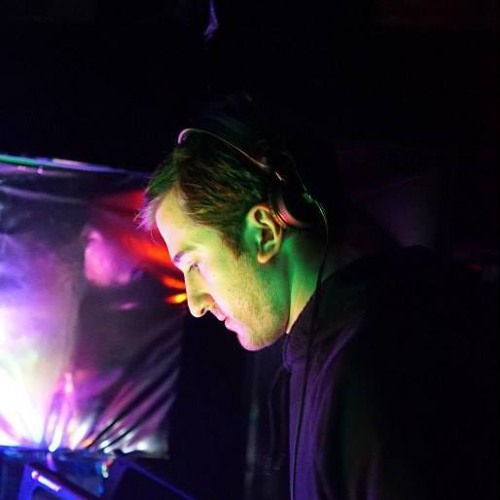
A new track from my mix: the finale - the dgro rework
Full mix coming soon. Please enjoy and share!
A small taste of my mix. Please enjoy, dance and share the fuck out of this!
Call Me DJ - the dgro rework
Included tracks:
The Knocks - Dancing with the DJ (Jesse Marco Remix)
Carly Rae Jepsen - Call Me Maybe
Carly Rae Jepsen - Call Me Maybe (Madeon Remix)
Justice - We Are Your Friends
|
Tracks
|
|
Tweets
|
|
Photos
|
|
me
|
|
Info
|
|
Posts
|
This is a good interview with Mark Zuckerberg. He shares insightful anecdotes and advice for a crowd of start-up founders and founders-to-be. Enjoy:
If you've ever seen this blog, you know I love projection mapping. With this work by W&K NY for the launch of Melo's new shoe, 3D Projection mapping gets taken to a whole new level:
Quick answer: I sure hope so! Check out this cool AR execution for the launch of the new VW Beetle:
Chris Sacca has a great story. This interview with Kevin Rose worth your time.
Foundation 07 // Chris Sacca from Kevin Rose on Vimeo.
Favorite point: Sacca looks for entrepreneurs who have lived, traveled or studied abroad. I agree 100% with the sentiment that those who have been in a country with people who speak a foreign language have to rely on creative thinking to communicate with the locals to get where they need to get and find food.
I'm enjoying watching this digital marketing one-up-manship amongst luxury car companies. I first noticed Mini's move not too long ago: an iPhone based real-life scavenger hunt/game of keep away centered around a virtual Mini car.
Not to be outdone, Mercedes recently posted this case study video of their twitter-powered car race:
Mercedes-Benz Tweet Race from thepixel on Vimeo.
Clever. Clever indeed.
Lots of good stats in this presentation from Edelman's Steve Rubel. Worth a watch.
This is still hilarious. Refound it thanks to @awolk's comment on this much-talked-about post from @malbonnington
I know there is something contradictory about posting this video on my blog.
digital ninja from moon stuff on Vimeo.
Holographics are cool. This use of holographics in Burberry's Beijing show is a glimpse into the awesomeness to come.
Yet another example of incorporating technology into marketing in a clean and exciting way. The holographics are not the full story, they add to it and make for a dazzling user experience.
I'm not sure if the source of this data is totally accurate but the numbers are in the right ballpark. "Astounding" is the word that comes to mind.
The World Is Obsessed With Facebook from Alex Trimpe on Vimeo.
“Transmedia” is all the rage these days. I have a better term for it: "Marketing". "Transmedia" is just a corporate-speak term for good marketing (and was actually coined around 1991 or 2003, depending on which source you look at).
Marketing has always had the best chance of success when a campaign is cohesive across media types/platforms and hits potential consumers from all sides. For example, one of the better marketing campaigns I can remember was for Godzilla (the more recent version with that P. Diddy take on Led Zeppelin’s Kashmir). The outdoor campaign was brilliant - First billboard: “His foot stretches from here...” followed by a second billboard half a mile down the highway: “...to here.” - but would not be nearly as powerful without the TV commercials and print ads tying the message together.So why all the hype around “Transmedia”? It seems marketers are looking for ways to explain that digital should not be thought of as a separate entity but instead fully integrated into overall campaigns. While consumers may not differentiate between the way they interact with the physical and digital world (with the rise of mobile, they are now intertwined more than ever), marketers do need to address digital as a different channel. Understanding marketing does not necessarily mean one understands marketing on the interwebs or the digital space in general. The proliferation of mobile will require yet more differing expertise. Digital is the most recent media to evolve. Digital and non-digital marketing should combine to create a compelling story. Just like a campaign involving print and TV was “Tansmedia”, so is a campaign involving print, TV and digital. The hype around “Transmedia” may be new but the concept is not. Now, let’s all return to getting our marketing messages through to consumers in whatever way we can.
I can't get enough of this projection mapping stuff... This time employed by Ralph Lauren
Rather than read the rumors and speculation surrounding Twitter's new monetization scheme, why not watch and listen to everything explained very directly from the company's former COO/new CEO:
Cool to see this projection technology being used in new ways for advertising
Woot, Gilt, Cinderella Wine, the list goes on. These sites cut the noise and get people to focus. They succeed by offering a limited choice for a limited time.
In the below talk, psychologist Barry Schwartz discusses how the abundance of choice leads to worse experiences. Too much choice results in less positive experiences.
When I find new music I like, I often say that I didn’t know what I was looking for but this is it. The latest example is the Sleigh Bells album - I didn't realize I wanted to listen to Electro-thrash-pop (I'm claiming this term) but apparently I do.
...And with that, I give you Malcolm Gladwell:
I'm speaking on a panel at this year's Digital Content Monetization conference. Use code DCM SPK53 for an additional 15% discount at the registration page.
With the emergence of location technology, this is the first time the web is part of your life as you live it; You don’t go out of your way to be part of the web. What emerges from here is yet to be determined but the possibilities are extremely exciting.
Before getting into this deeper, let's acknowledge that location is in its infancy: FourSquare just reached 3 million registered users, Facbook just launched Places, etc. Adoption is slow as real-world value has not become a norm. However, the potential of location marketing is just beginning to show itself. For example, Starbucks and Tasti D-Lite use Foursquare as a customer rewards program. While much of the conversation surrounding location technologies focuses on this use case, customer retention is only the beginning. Mobile is the great connector between our physical and digital lives. With mobile and location technology progressing rapidly, the use of digital in peoples' everyday tasks will increase and will make said tasks more convenient, productive, and generate new revenue models for companies.Once payment systems evolve (i.e. your credit card lives on your mobile phone), you get quite a potent mix by combining these newly accepted forms of payment with location marketing. Affiliate marketing can then move into the physical space. For example, one Saturday afternoon, you get a message to via The Gap to Facebook on your phone informing you that The Gap two blocks from your current location is having a sale. You go to the store and take your selected shirt to the counter. At this point, the salesperson scans the barcode on your phone which is attached to your credit card account. This transaction is registered with Facebook who then gets a cut of the sale to this third-party physical retailer (The Gap), for enabling the recommendation. (Note: I'm purposely avoiding the Facebook credist discussion here.)
It's also worth thinking about the possibilities of an improved shopping experience. Taking the above example, you walk into the Gap based on the Facebook message. You have shopped at the Gap many times before and everything you bought has been logged. This helps you as the consumer because rather than the salesperson recommending you buy the orange shirt you already own, you can already be directed towards the pants that match. (Note: I'm not going to go into the privacy discussion this evokes as many people have covered this topic already.)While we're not there yet, I consider this an elementary use of location and mobile technology. Where will this all go?